
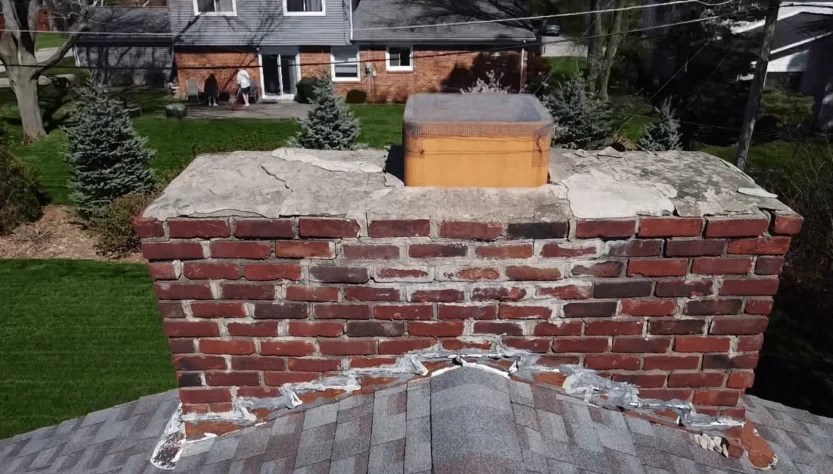
When people think about chimney maintenance, they usually picture soot, creosote, or a flue that needs sweeping. The part that quietly causes the most damage in Ontario is often much simpler: the concrete slab and metal cover sitting at the very top. The chimney crown and cap are only a few inches thick, but they protect everything below them, and when they fail, water gets into places a homeowner never sees until the damage is expensive.
This guide explains what the crown and cap do, how they fail, the warning signs to look for from the ground, and what repair involves.
What the Crown and Cap Actually DoThe Crown
The crown is the sloped slab, usually made of concrete or mortar, that covers the top of the chimney around the flue. Its job is to shed rain and snow away from the brick below it and to keep water out of the gap between the flue liner and the masonry. A properly built crown extends past the brick edge by a couple of inches, creating a drip edge so water falls clear of the wall instead of running down it.
The Cap
The cap is a metal or stone cover, often with a mesh screen, set over the flue opening. It keeps rain, birds, animals, and debris out of the flue, and the mesh helps contain stray sparks. A cap does not replace a crown. They work together, with the crown protecting the masonry and the cap protecting the flue.
How Crowns and Caps Fail
- Poor original construction. Many older chimneys have crowns made of a thin layer of leftover mortar, with no slope and no overhang. These crack within a few winters.
- Freeze-thaw damage. Water enters hairline cracks, freezes, and widens them every winter.
- Shrinkage cracks. Concrete naturally shrinks as it cures, and cracks appear if it is not reinforced or mixed correctly.
- Rusted or loose caps. Cheap steel caps rust through, and wind can loosen poorly fastened ones.
- Missing caps. Some chimneys never had a cap installed at all.
- Flashing failure at the roofline. Although flashing is separate from the crown, a leak at the base often appears alongside crown damage and gets blamed on the wrong source.
What Happens When Water Gets In
A damaged crown or missing cap lets water run into the top of the chimney. From there, the damage tends to follow a predictable path.
- Brick and mortar deterioration. Water saturates the top courses and freezes, causing spalling and mortar loss.
- Flue liner damage. Moisture cracks clay flue tiles, which can allow heat and gases to escape into the chimney structure.
- Leaning or loose masonry. The upper courses can loosen and shift, and in severe cases need rebuilding.
- Interior leaks. Water can travel down the chimney and appear as stains on ceilings and walls around the fireplace.
- Rusting of the damper and firebox components. Metal parts inside the fireplace corrode when moisture reaches them.
- Animal entry. Without a cap, birds, raccoons, and squirrels can nest in the flue.
Signs You Can Spot From the Ground
You do not need to climb a roof to notice problems. A pair of binoculars and a good look on a clear day will reveal a lot.
- Visible cracks in the concrete slab at the top, or pieces missing
- A crown with no overhang, or one that appears flat and level
- A rusty, bent, or missing metal cap
- Crumbling mortar or loose brick in the top few courses
- White staining down the sides of the chimney
- Water stains on the ceiling or wall near the fireplace after heavy rain
- Bits of mortar or brick in the gutters or on the ground near the base
Roof work is dangerous. If a closer inspection is needed, it is best left to a professional with the right safety equipment.
Repair Options Sealing Minor Cracks
Hairline cracks in an otherwise sound crown can sometimes be sealed with a flexible, masonry-rated product. This is a short-term fix at best, and it works only when the slab is still firmly attached and not crumbling.
Crown Repair or Resurfacing
Where the crown has broken down but the chimney below is sound, a mason can chip out damaged material and apply a new surface layer. This restores slope and drainage without rebuilding the whole top.
Full Crown Replacement
When cracking is extensive or the slab has no overhang, replacing it is the lasting solution. A new crown is poured or cast with a slope, a drip edge, and a flexible joint around the flue liner so movement does not crack it. This is routine chimney repair Toronto work and tends to be one of the most cost-effective repairs relative to the damage it prevents.
Installing or Replacing the Cap
A quality stainless steel or copper cap lasts far longer than a basic galvanized one. It should be sized to the flue and fastened securely.
Rebuilding the Top Courses
If the brick has loosened or spalled in the upper section, those courses are removed and rebuilt before the new crown goes on. Where this matches a pattern of general brick deterioration, a mason may recommend broader brick repair to bring the whole stack back to a sound condition.
Timing and Local Conditions
Crown work uses concrete or mortar, which needs temperatures above roughly 5°C to cure correctly. In Ontario, late spring through early fall is the right window, and early booking helps since chimney repairs often cluster right after winter. Homeowners looking for Mississauga masonry support commonly schedule an inspection in April to catch winter damage before the next freeze cycle.
Questions to Ask Before You Hire
- Is the crown cracked, or is it missing a drip edge altogether?
- Is the flue liner in good condition, and how will you check it?
- What type of cap do you recommend, and what material is it made of?
- Does the flashing need repair at the same time?
- Will the work include repointing the top courses?
FAQ
How long does a chimney crown last?
A properly built concrete crown can last 25 years or more. Thin mortar crowns often fail in under 10 years.
Do I need a cap if I do not use the fireplace?
Yes. An uncapped flue lets in rain, snow, and animals whether or not the fireplace is in use, and the water damage still reaches the masonry.
Can I fix a cracked crown myself?
Small cracks can be sealed with a masonry crack sealer, but any repair means working on the roof at height. Many homeowners choose to hire a professional for safety and for a longer-lasting result.
Is a leaking chimney always a crown problem?
No. Leaks can also come from flashing, the flue liner, or condensation. A proper inspection identifies the actual source before repairs begin.